

Jacket Back Digitizing
Large design. Controlled stitch plan.
Large back embroidery needs more than a bigger file. Fill direction, sequencing, travel and garment movement have to be planned across the entire design.
- Large-format stitch planning
- Registration-aware sequencing
- Major machine formats
- 01 Artwork
- 02 Back placement
- 03 Stitch route
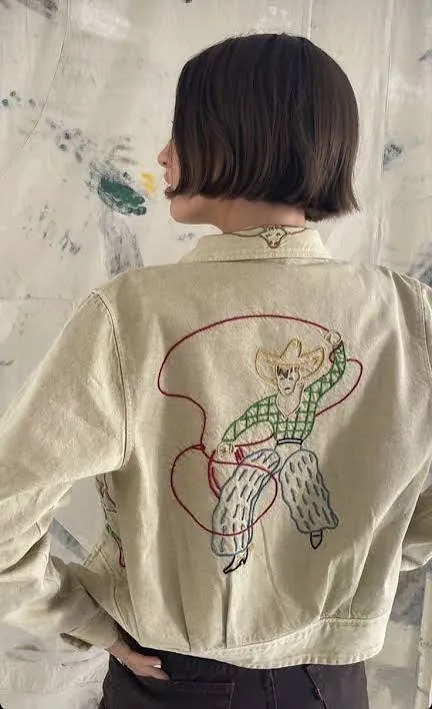
01–03 sample design · illustration
Why size changes the file
Scaling up the artwork
doesn't scale up the solution.
Large back embroidery needs more than a bigger file. Fill direction, sequencing, travel and garment movement have to be planned across the entire design.
Large fills pull on fabric. If they all run in one direction at full density, the back of the jacket can draw in, pucker along the edges and end up stiff.
Simply enlarging a small file stretches stitches and satin widths, and keeps a sequence that was never planned for the distances involved. Travel gets longer, registration gets harder and the stitch count climbs without adding anything you can see.
Scaled-up file
- Unnecessary densityCoverage set for a small logo, now across a whole back
- Long travelJumps that cross the design again and again
- Poor fill directionOne angle everywhere, pulling one way
- Weak registrationOutlines drift from fills over the distance
- Inefficient sequenceAn order that was never planned for this size
Large-format plan
- Sectioned fill areasLarge areas broken into manageable zones
- Controlled stitch directionAngles chosen per shape
- Planned travelRoutes that reduce unnecessary movement
- Registration-aware sequenceOutlines placed with the fills they frame
- Application-specific densitySet for the garment and the finished size
Anatomy of a large back design
Bigger design. More to control.
One sample design on a jacket back. Select a part to see what the file has to plan at this scale.
-
Jacket construction, seams, yokes and your usable hoop or frame area all affect where a back design can sit. Tell us the garment and your largest sewing field and we size the layout to it.
-
Large filled areas may be broken into stitch zones so direction and movement can be controlled. Not every large design needs visible segmentation; it depends on the artwork.
-
One giant uniform fill direction may not give the best visual or structural result. Angles chosen per shape spread the pull across the fabric and change how each area catches the light.
-
The machine has to move between elements. A planned route groups nearby areas, hides travel under later fills where possible and reduces unnecessary jumps and trims, though some trims are normal.
-
Outlines, details and the fills they sit on have to stay aligned. Across a large design, garment movement makes this more demanding, so outlines are usually sewn close in sequence to their fills.
-
Sequence is planned around the design, the garment and how each section affects the next. Working outward from the center is common, but there is no single order that suits every design.
Large fills
Large fills need direction.
The same shapes, filled two ways. At this size, the choice shows.
One-direction fill
- Every area at the same angle
- Pull concentrated in one direction
- Flat, uniform texture
Shape-following / sectioned fill
- Angles chosen per shape
- Pull spread across the garment
- Areas separate visually
- Texture Direction gives each area its own surface.
- Light Stitch angle changes how thread reflects.
- Fabric movement Varied angles spread the pull.
- Stitch buildup Zones avoid stacking where areas meet.
Illustration Stitch lines are drawn larger than real stitches.
Travel and trims
The machine has to get from here to there.
Six elements spread across a back. The order they sew in decides how far the machine travels.
Poor route
- Long jumps across the design
- Repeated crossings
- Unnecessary travel and trims
Planned route
- A logical progression
- A cleaner path
- Fewer avoidable movements
Illustration A planned route reduces unnecessary travel; it does not remove every trim.
Registration at scale
A small shift becomes obvious on a large design.
When fills and outlines drift apart, gaps open on one side and fill spills over on the other.
Misregistered
- Gap between outline and fill
- Fill showing past the border
- Details off their shapes
Aligned
- Outline sits on the fill edge
- Even borders all round
- Details where they belong
What the file can plan for
- Garment movement
- Sequencing
- Fill direction
- Stitch buildup
Hooping, stabilization and machine setup remain part of production.
Illustration The shift is exaggerated so it is visible.
Jacket construction
The garment is part of the job.
Different jackets change the assumptions behind a file. Tell us what it is going on.
-
Lightweight jacket
Nylon shells and thin linings move and pucker easily.
- Lighter density
- Careful compensation
- Quilting and lining matter
-
Denim
Stable, but heavy seams and yokes limit placement.
- Seams shape the usable area
- Firm surface
- Thick at the hem and yoke
-
Work jacket
Canvas and duck are firm but thick.
- Holds dense fills well
- Thick layers at seams
- Often lined
-
Varsity / heavier garment
Wool, melton and mixed panels.
- Soft surface pile
- Panel seams across the back
- Often combined with appliqué
Illustration Fabric behavior varies by garment; we plan the file, production handles hooping and backing.
Embroidery or appliqué
Two ways to cover a large back.
Neither is always faster, cheaper or better. The artwork and the garment decide.
Full embroidery
- Every surface stitched
- High thread coverage
- Right for some artwork and finishes
Appliqué
- Fabric can replace large fill areas
- A different production sequence
- Can reduce stitched coverage on suitable designs
Illustration Mixed construction is also common. Appliqué digitizing
Large lettering
Big letters still need clean structure.
At back-panel size, a letter is a shape with its own fill, edge and sewing order.
- Satin or fillWide strokes are too long for satin, so they become fill with a satin edge or split satin.
- Internal spacingGaps between and inside letters are set for the finished size.
- OutlinesBorders are sequenced with the fills they frame so they stay aligned.
- Curves and wordmarksArched and long wordmarks are sequenced so travel stays short.
Before we digitize
Six things we ask. "Not sure" is fine.
- 01
Garment
Jacket, denim, varsity, workwear or other.
- 02
Placement
Full back, upper back, lower panel or other.
- 03
Finished size
The intended final embroidery dimensions.
- 04
Artwork
Vector preferred; a suitable raster is fine to start.
- 05
Technique
Full embroidery, appliqué, mixed, or not sure.
- 06
Machine / frame
Your largest sewing field or frame, if you know it.
Service snapshot
Jacket Back Digitizing at a glance
- Best for
- Jackets, workwear, club apparel and large back logos
- Main challenges
- Large fills, travel, registration and sequencing
- Techniques
- Full embroidery, appliqué or mixed construction
- Fill strategy
- Sectioned where the design needs it, angles per shape
- Size
- Built to your garment and sewing field
- Formats
- DST, EXP, PES and other supported formats
- Artwork
- Vector preferred; raster accepted for review
- Turnaround
- Confirmed with your quote
Formats you can request
Machine formats
- DSTTajima
- PESBrother / Baby Lock
- JEFJanome
- EXPMelco / Bernina
- VP3Husqvarna / Pfaff
- XXXSinger
- HUSHusqvarna
- EMBEditable working file (ask first)
A standard order includes one machine format of your choice. Additional formats, and the editable EMB working file, are not automatic: we confirm availability and any charge with your quote.
Not sure which format? Large designs must fit your machine's sewing field. Tell us the machine and its maximum field and we build the file to match. We'll recommend the correct file for your machine.
Converting a file you already haveHow orders run
How jacket back orders run.
-
01
Upload
Upload artwork
Send the design, and the jacket if you have a photo.
-
02
Size
Tell us garment and final size
Fabric, placement and your largest sewing field.
-
03
Plan
We plan the large-format stitch route
Fill zones, angles, travel and sequence for the whole back.
-
04
Deliver
Receive the machine-ready file
In your chosen machine format, sized to your field, with a color and stitch sheet.
Large back design ready?
Send the artwork.
Tell us the jacket.
We'll review the size, garment and construction before planning the stitch route.
Questions
Jacket back questions.
What people ask before sending a large back design. Anything else, ask with your quote.
All questions01What is jacket back digitizing?
Building an embroidery file for a large design across the back of a jacket, with fill zones, stitch direction, travel and sequence planned for that size and garment.
02Can I simply enlarge a left-chest embroidery file for a jacket back?
Not reliably. Enlarging stretches stitch lengths and satin widths and keeps a sequence planned for a small logo. A jacket back should be digitized at its actual size.
03Why do large designs need different sequencing?
Distances are longer and the garment moves more, so the order affects travel, trims and how well outlines stay aligned with their fills. Sequence is planned around the design and garment.
04How are large fill areas handled?
Often by breaking them into zones with their own stitch angles, and by setting density for the garment. Not every design needs this; it depends on the artwork.
05Can large jacket designs use appliqué?
Yes, where the artwork suits it. Fabric can replace large fill areas, with a different production sequence. See appliqué digitizing.
06Can you digitize large lettering?
Yes. Wide strokes usually become fills with a satin edge, and spacing, outlines and order are set for the finished size. For brand marks, see logo digitizing.
07Do jacket seams affect embroidery placement?
Yes. Yokes, center seams, side seams and thick hems limit where a design can sit. Tell us the jacket style and we place the design around them.
08Can one large design require multiple hoopings or production setups?
Some designs are larger than a machine's sewing field. Tell us your largest field before we start; we size the layout to fit it, and if the design cannot fit we discuss the options with you before digitizing.
09Which machine formats can you provide?
DST, EXP, PES and other supported formats. Tell us your machine so the file matches it.
010What artwork should I send?
A vector file if you have one; a clear raster is fine to start. If the artwork needs cleaning up, vector art redraw can help first.
011Can you fix a large file with too many stitches or poor registration?
Often. Sectioned fills, cut-backs under overlapping shapes and better sequencing can help. Send the file and a photo of the sew-out and we review what needs to change.
012Does digitizing control hooping and stabilization?
No. The file plans stitches, direction and order. Hooping, stabilizer and machine setup are part of production and are chosen by whoever sews the jacket.
Related services
Built for a specific job.
-
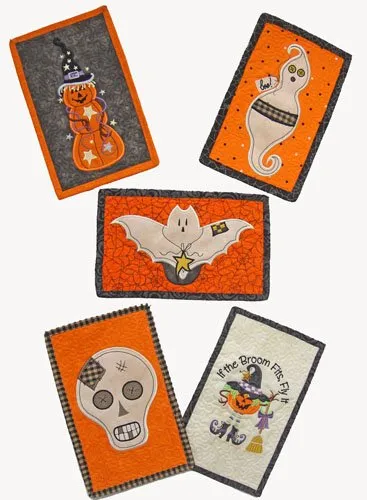 Appliqué Digitizing
Placement, tack-down and cover stitches sequenced with stops for fabric and trimming.
- Illustration Logo Digitizing Brand marks simplified for thread and built as size-specific versions that sew the same every time.
-
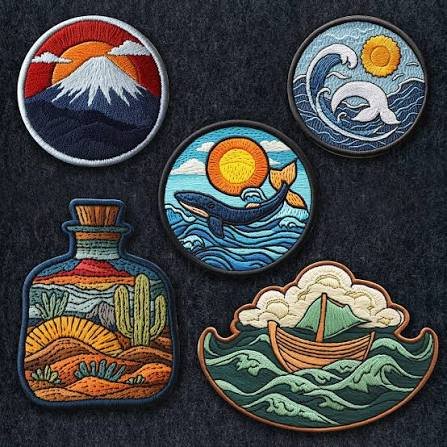 Patch Digitizing
Border, base and density planned for merrow, heat-cut or full-stitch patch production.
- Illustration Vector Art Blurry logos redrawn by hand as clean, scalable AI, EPS, SVG and PDF files.
Free quote · No payment to ask
Built for the scale.
Ready for the run.
Upload the design, tell us where it needs to sew, and we'll take it from there.