

Appliqué Digitizing
Place it. Tack it. Finish it clean.
Appliqué files coordinate fabric placement, tack-down and edge coverage so the material stays aligned and the finished border sews cleanly.
- Layer-by-layer stitch planning
- Fabric-aware construction
- Major machine formats
- 04 Cover stitch
- 03 Tack-down
- 02 Fabric piece
- 01 Placement line
01–04 sample star · illustration
Why appliqué is different
The fabric has to land
where the stitches expect it.
Appliqué replaces large fills with a piece of fabric, held down and edged in thread. We build the stops, tack-downs and cover columns so your operator can run it without guessing.
An appliqué file does more than sew decoration. It guides production: where the fabric goes, when the machine stops, what holds the piece down and what finally covers its edge.
Good-looking artwork can still fail if those paths are poorly planned. The fabric shifts, the tack-down misses the edge, or the cover stitch leaves raw material showing.
Weak appliqué file
- Fabric shiftsNothing holds the piece before the edge sews
- Tack-down misses the edgeRaw fabric is left loose or exposed
- Cover stitch exposes materialThe finishing border does not reach the cut edge
- Bulky cornersStitches stack up at points and inside angles
- Poor registrationInterior details land off the fabric
Appliqué-specific file
- Clear placement pathThe operator can see where the piece belongs
- Controlled tack-downPositioned to sit under the finishing stitch
- Planned edge coverageThe cover stitch is set for this fabric and size
- Corner-aware stitchingPoints and inside angles handled deliberately
- Clean sequenceStops, layers and details in a workable order
Anatomy of an appliqué file
Appliqué is built in layers.
One sample star, five arms, five moments in the file, clockwise from the lower left. Select a stage to see what it does.
-
The placement line tells the operator where the appliqué material belongs. It is usually a single run on the base garment, followed by a stop. Workflows vary, and some pre-cut production positions pieces differently.
-
For trim-in-the-hoop work the fabric piece is laid over the placement line and extends beyond the finished edge, so there is enough material for the cutting and finishing method chosen. How much extra depends on the fabric and the process.
-
The tack-down secures the appliqué material before the final edge is covered. A run or light zigzag holds the piece, positioned so the finishing stitch will hide it.
-
Excess material is removed by the operator in the hoop, or the piece arrives pre-cut, including laser-cut or die-cut production. We build the file for the method you use; the fabric itself is handled in production.
-
The finishing stitch has to cover the edge while keeping the intended shape clean. Satin is common; zigzag, blanket or E-stitch edges are also possible. Width is set for the fabric, the size and the look.
-
Placement, material, tack-down, trim or pre-cut, cover stitch, then interior details. When pieces overlap, lower layers are finished first. The exact sequence depends on the artwork and production method.
The production sequence
One shape.
Five production moments.
The same piece, from a line of stitches on the garment to a finished, covered edge.
-
01
Placement
A run stitch marks where the fabric goes. The machine stops.
-
02
Fabric laid down
The material is positioned over the line.
-
03
Tack-down
Stitches hold the piece so it cannot move.
-
04
Excess removed
Trimmed in the hoop, or already pre-cut.
-
05
Satin-covered finish
The edge is covered, then any interior detail sews.
Illustration One sample star shown through the sequence.
Production method
Pre-cut or trim-in-the-hoop.
Two common workflows. Neither is universally better, and they are not the only ones; tell us how you work and the file follows.
Pre-cut appliqué
The fabric piece is prepared before placement, by hand, die or laser.
- Repeatable shape
- Less manual trimming in the hoop
- Requires accurate positioning
Trim-in-the-hoop
The fabric is laid over the stitched shape and trimmed during production.
- Flexible production workflow
- The operator trims after tack-down
- Tack-down and cover paths become important
Illustration Placement line and cut shape are matched to the method you use.
Material
The top fabric changes the job.
Material behavior affects edge stability, fraying, thickness and what the cover stitch has to do.
-
Twill
A common choice for team names and numbers; often pre-cut.
- Edge
- Stable
- Fraying
- Low to moderate
- Thickness
- Medium
-
Felt
A non-woven material that does not fray, so softer or decorative edges can work.
- Edge
- Stable
- Fraying
- Very low
- Thickness
- Medium to thick
-
Cotton
Prints and solids for decorative work; woven edges fray and need full coverage.
- Edge
- Can shift
- Fraying
- High
- Thickness
- Thin
-
Specialty fabric
Metallic, glitter or textured materials, planned case by case.
- Edge
- Varies
- Fraying
- Varies
- Thickness
- Varies
Illustration Behavior varies by product; tell us the exact material if you know it.
Edge style
Covered edge or raw edge.
Different edge styles need different stitch planning. A raw edge is a deliberate look, not a satin border that failed.
Covered edge
A satin or similar border sews over the cut edge.
- Clean, finished outline
- Cover set for fabric and size
- Hides the tack-down
Raw-edge / specialty
A stitch line sits inside the edge and the fabric edge stays visible.
- Soft, handmade look
- Stitch line set in from the edge
- Fraying is part of the design
Illustration Tell us which look you want before digitizing.
Appliqué or patch
Two ways to add fabric and thread.
They are often confused. Neither is better; they are made differently.
Appliqué
- The fabric piece becomes part of the garment
- Built during embroidery production
- Placement and tack-down are part of the workflow
Patch
- A separate, finished embroidered piece
- Produced independently
- Attached to the garment later
Illustration Planning a separate badge instead? Patch digitizing
Letters and numbers
Big letters, clean edges.
Team names, varsity letters, numbers and large initials are classic appliqué. Their shapes test the edge path at every turn.
- CornersOuter points are turned or mitered so the cover stitch does not pile up.
- Inside anglesWhere strokes meet, the edge path is planned so fabric stays covered.
- CountersHoles in letters like A, B and O get their own placement, tack-down and cover.
- Team names
- Varsity letters
- Numbers
- Sweatshirts
- Jackets
Before we digitize
Six things we ask. "Not sure" is fine.
- 01
Artwork
The design, and which shapes should be fabric rather than stitches. Not sure? We can suggest.
- 02
Finished size
The final embroidery dimensions.
- 03
Appliqué material
Twill, felt, cotton, other, or not sure.
- 04
Production method
Pre-cut, trim-in-the-hoop, or not sure.
- 05
Base garment
Jacket, sweatshirt, jersey, bag or other.
- 06
Edge style
Covered satin, a specialty edge, or not sure.
Service snapshot
Appliqué Digitizing at a glance
- Best for
- Large letters, teamwear, jackets, sweatshirts and decorative fabric elements
- Construction
- Placement, tack-down and edge finish
- Common challenges
- Registration, exposed edges, corners and fabric movement
- Edge styles
- Satin, zigzag, blanket / E-stitch, raw edge
- Cut files
- Placement can be matched to your cut shape
- Formats
- DST, PES, EXP, JEF and other supported formats
- Artwork
- Vector preferred; suitable raster accepted
- Turnaround
- Confirmed with your quote
Formats you can request
Machine formats
- DSTTajima
- PESBrother / Baby Lock
- JEFJanome
- EXPMelco / Bernina
- VP3Husqvarna / Pfaff
- XXXSinger
- HUSHusqvarna
- EMBEditable working file (ask first)
A standard order includes one machine format of your choice. Additional formats, and the editable EMB working file, are not automatic: we confirm availability and any charge with your quote.
Not sure which format? Appliqué relies on stop commands between steps. Commercial formats like DST and EXP handle these well; some home formats treat stops as color changes, which works the same way at the machine. We'll recommend the correct file for your machine.
Converting a file you already haveHow orders run
How appliqué orders run.
-
01
Upload
Upload artwork
Send the design and mark any shapes you want as fabric.
-
02
Confirm
Confirm material and production method
Fabric, pre-cut or trim-in-the-hoop, and the edge style.
-
03
Build
We build the appliqué sequence
Placement, stops, tack-down, cover and details for each piece in a practical order.
-
04
Deliver
Receive the machine-ready file
The file with its stops in place, in your chosen machine format, with a color and stitch sheet.
Appliqué artwork ready?
Send the design.
Tell us the material.
If you're not sure about the production method, send the artwork and we'll review what the file needs.
Questions
Appliqué questions.
What people ask before sending appliqué artwork. Anything else, ask with your quote.
All questions01What is appliqué digitizing?
Building an embroidery file that sews a fabric piece into the design: a placement line, stops, a tack-down to hold the material, a finishing edge and any details on top, in a workable order.
02How does appliqué embroidery work?
The machine sews a placement line and stops. The operator lays the fabric, the machine tacks it down, the excess is trimmed (or the piece was pre-cut), and a cover stitch finishes the edge before interior details sew.
03What is a placement stitch?
A run stitch on the base garment that shows where the appliqué material belongs. The machine usually stops after it so the fabric can be positioned.
04What is a tack-down stitch?
A run or light zigzag that secures the fabric before the final edge is covered. It is positioned so the finishing stitch hides it.
05What is the difference between pre-cut and trim-in-the-hoop appliqué?
Pre-cut pieces are prepared before placement, by hand, die or laser, and dropped onto the placement line. Trim-in-the-hoop uses a larger piece that the operator trims after tack-down. Both work; the file is built for the one you use.
06What fabrics can be used for appliqué?
Twill, felt, cotton and many specialty fabrics. Each behaves differently at the edge, so tell us the material and we plan the tack-down and cover stitch for it.
07How is appliqué different from a patch?
Appliqué sews the fabric into the garment during embroidery. A patch is a separate finished piece attached later. See patch digitizing for patches.
08Can appliqué be combined with regular embroidery?
Yes. Most appliqué designs include stitched details, lettering or fills, sequenced after the fabric pieces are finished.
09Can you digitize appliqué letters and numbers?
Yes. Team names, numbers and varsity letters are common appliqué work, with corners, inside angles and counters planned so the edge stays covered. For large back designs, see jacket back digitizing; for rosters and uniform rules, see sports and teamwear.
010Which machine formats can you provide?
DST, PES, EXP, JEF and other supported formats, with stops placed for the appliqué steps.
011What information should I send with the artwork?
The finished size, the appliqué material, whether pieces are pre-cut or trimmed in the hoop, the garment and the edge style. "Not sure" is fine for any of these. If the artwork is low quality, vector art redraw can help first.
012Can you fix an appliqué file with exposed fabric edges?
Usually. Exposed edges often come from a tack-down or cover stitch that does not match the fabric or cut shape. Send the file, a photo of the sew-out and the material, and we review what needs to change.
Related services
Built for a specific job.
-
 Patch Digitizing
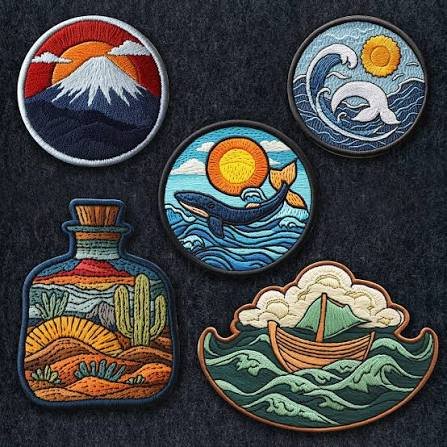
Border, base and density planned for merrow, heat-cut or full-stitch patch production.
-
 Jacket Back Digitizing
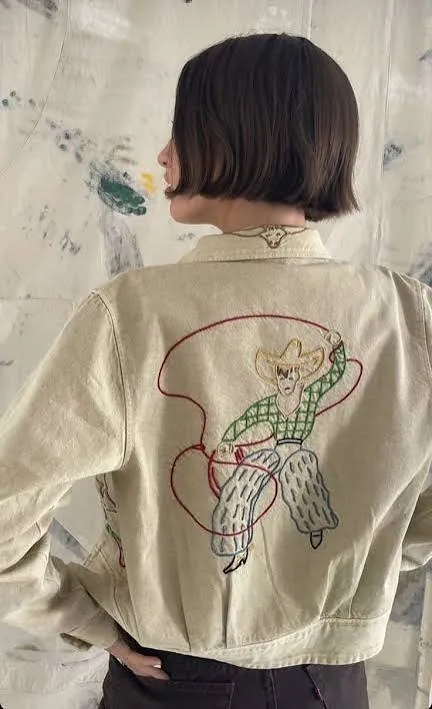
Large-format designs with controlled stitch counts, varied fill angles and fewer trims.
- Illustration Logo Digitizing Brand marks simplified for thread and built as size-specific versions that sew the same every time.
- Illustration Vector Art Blurry logos redrawn by hand as clean, scalable AI, EPS, SVG and PDF files.
Free quote · No payment to ask
Layered properly.
Ready to stitch.
Upload the design, tell us where it needs to sew, and we'll take it from there.